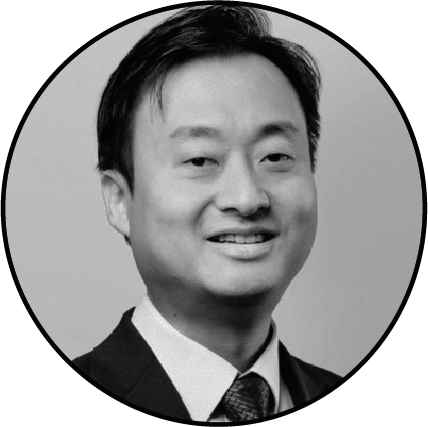
Exclusive interview with Mark Lee, Senior Portfolio Manager, Head of Real Estate, Australian Retirement Trust
GLOBAL INVESTMENT INSIGHTS
“Our ambition is not simply to invest with the best managers. It is to build partnerships that produce better access, better decisions and better outcomes for members.”
Mark Lee, Senior Portfolio Manager, Head of Real Estate, Australian Retirement Trust

Mark Lee is a Senior Portfolio Manager and Head of Real Estate at Australian Retirement Trust (ART). ART is one of Australia’s largest superannuation funds, with more than ~A$375 billion in assets under management on behalf of over 2.4 million members.
Mark joined ART in 2012, as part of SunSuper, and is responsible for global real estate investment strategy, portfolio construction and capital allocation, investment and manager selection, strategic partnerships, active asset management, market research and leadership of the real estate investment team.
In this exclusive interview with Global Investment Institute, Mark discusses ART’s current priorities for its global real estate (RE) portfolio, where he sees the most compelling relative-value investment opportunities across markets and main themes ART is aiming to capture through their RE investments. He also explores how geographic allocations are evolving and the qualities he looks for in external investment managers to foster successful, long-term partnerships.
Q. As the Head of Real Estate at Australian Retirement Trust, what is your key priority for the portfolio in the current investment environment?
A. Our key priority is to build a resilient global real estate portfolio capable of delivering strong risk-adjusted returns for ART’s members across market cycles.
Currently, that means being patient on price, decisive when conviction is high and realistic about the distinction between temporary disruption and permanent structural change.
We have been balancing new capital deployment with active stewardship of the existing portfolio. Higher financing costs have raised the importance of capital structure, liquidity and execution, while also creating opportunities for investors with long-term capital and the capacity to solve complexity. Periods of market stress can also provide access to prime assets that are tightly held and seldom available in more favourable conditions.
Ultimately, our focus is on durable income, disciplined leverage and value creation through improving assets and operating platforms, rather than relying on yield compression.
We are also concentrating capital with high-conviction partners to strengthen alignment and access opportunities tailored to our portfolio objectives.
Q. Where are you currently seeing the most compelling opportunities to put capital to work across real estate markets globally, on a relative value basis?
A. The most compelling opportunities are often emerging where capital is scarce rather than where investor interest is greatest. Refinancing pressures, constrained balance sheets and evolving ownership models are creating attractive entry points through secondaries, recapitalisations, and structured partnerships. Market dislocation can also unlock access to prime assets that are rarely available in more benign conditions.
We are focused on opportunities where the deployment of our liquidity can be rewarded appropriately through a combination of strong long-term returns, good inflation linkage, robust downside protection, and/or improved portfolio resilience.
In the US, we continue to see opportunities in sectors supported by durable income and favourable supply-demand fundamentals. These include necessity-based retail, industrial outdoor storage and strategic real estate underpinned by long leases with counterparties with good credit quality.
In Europe, selected healthcare, senior housing and real estate credit strategies can provide access to demographic demand and financing dislocation. Across all regions, returns should be supported by cash flow, an attractive entry basis and credible operational value creation.
Q. What are the main themes you are looking to capture in your portfolio through your real estate investments?
A. Our goal is to strengthen diversification by investing across themes with distinct and durable demand drivers. We are particularly focused on demographics, deglobalisation and strategies that are less dependent on GDP growth.
Demographic change is a powerful theme because it shapes demand across the residential spectrum, from student accommodation and rental housing to aged care. While each serves a different stage of life, all are supported by long-term drivers such as population growth and change, urbanisation, affordability pressures and an ageing society. We seek targeted exposure where demand is most durable, supply is constrained and specialist operating capability can create additional value.
Deglobalisation is also reshaping opportunity sets by increasing demand for logistics, manufacturing space, industrial outdoor storage and strategically located infrastructure, as businesses prioritise supply-chain resilience and supply security.
We also favour delinked strategies, where underlying demand is driven by essential needs, demographic change or structural behaviour rather than economic growth. This can provide more resilient income and valuable portfolio diversification.
Q. From a regional perspective, which geographies are playing a growing role in your real estate portfolio? What are the drivers reshaping your geographic portfolio composition?
A. Australia remains the foundation of our portfolio, reflecting both our home-market knowledge and our desire to maintain a substantial allocation to high-quality core investments. We seek assets with durable income, strong occupier fundamentals and contractual or market-based rental growth, aiming to provide stability while supporting global expansion.
The US remains important because of its scale, liquidity and depth of specialist operating platforms. It gives us the ability to construct targeted exposure to sectors such as necessity-based retail, industrial outdoor storage and selected residential strategies, rather than relying on broad market exposure.
Europe also plays an important role, with opportunities emerging across living, healthcare, senior housing and real estate credit. Our local presence in London has served us well by strengthening market coverage, partner engagement and execution capabilities.
We are also considering a greater focus on Asia-Pacific. Economic activity, population growth and urban development are increasingly concentrated in the region, creating long-term demand for housing, logistics and other forms of institutional-quality real estate.
ART has already established investment structures targeting industrial and diversified core-plus opportunities across developed Asia, including Japan. We will remain selective by country, city, sector and partner, focusing on markets where demographic support, institutional depth and local execution capability can translate into attractive risk-adjusted returns.
Q. What are the main characteristics you look for in a partnership with an external manager and what defines a successful long-term partnership?
A. Our aspiration is to be the best partner to the world’s best investment managers. We acknowledge that a genuine partnership requires more than capital. It requires alignment, transparency, trust and a shared commitment to long-term outcomes.
We look for managers with differentiated sourcing, specialist operating capability and the confidence to engage in open, constructive dialogue. The strongest partners communicate material developments early, are candid when an investment is not progressing as expected and welcome informed challenge. Governance must be clear, and incentives aligned with sustained value creation.
Flexibility is also essential. Markets change, and successful partners adapt while maintaining investment discipline. We also value managers who take the time to understand our portfolio objectives and challenges, rather than approaching the relationship with a predetermined product or transaction.
The best relationships extend beyond individual investments. They provide better access, differentiated insights, knowledge transfer and efficient execution. Most importantly, they are aligned around delivering sustainable long-term outcomes for our members.
Mark Lee, Senior Portfolio Manager, Head of Real Estate, Australian Retirement Trust
Mark Lee is Senior Portfolio Manager and Head of Real Estate at Australian Retirement Trust, where he leads the investment strategy and implementation of the fund’s global real estate portfolio.
ART is one of Australia’s largest superannuation funds, managing more than A$375 billion in assets on behalf of over 2.4 million members.

Global Investment Institute is Australia’s leading provider of conferences for capital allocators.
We connect institutional investors, family office and private wealth investment leaders with peers and global investment experts to share knowledge and thought leadership in a private, collegiate and discussion-focussed setting, conducted under Chatham House Rule. Attendance is by invitation-only.
We host private gatherings for investment leaders across three distinct segments:
Institutional
Family Offices
Private Wealth (institutional-scale)
Each segment has its own series of dedicated events for delegates to connect with peers and we have an unrivalled network of capital allocators who we invite to attend.
UPCOMING EVENTS