Exclusive interview with John Pearce, Chief Investment Officer, UniSuper
Global Investment Insights
with John Pearce, Chief Investment Officer, UniSuper | November 2025
John Pearce is the Chief Investment Officer of UniSuper. He joined UniSuper in 2009 and is responsible for the management of their investment functions.
John has over 35 years’ experience in the financial services industry both in Australia and Asia. He has held several senior positions including Chief Executive Officer and General Manager, Investments for Australia's largest asset management company, Colonial First State from 2000 to 2006.
In this exclusive interview with Global Investment Institute, John explains how UniSuper positions its portfolios amid evolving geopolitical events, the growing role of unlisted assets within a diversified allocation and how their Fund manages the illiquidity associated with private markets, as well as the advantages and challenges of UniSuper’s internal investment management program.
John explores how technological disruption and AI are shaping future market leadership, how to avoid the laggards and UniSuper’s position on the tech revolution. He also shares the key challenges and areas of progress in UniSuper’s journey towards decarbonising portfolios.
Q. As an institutional investor allocating capital globally, across asset classes, how are you positioning your portfolios to manage the risks and capture opportunities stemming from geopolitical events?
A. What we find with geopolitical events is that the market tends to shrug them off, if you look at all the geopolitical events back to the Arab/Israeli war in the 1970s, you’ll see that markets bounce back pretty quickly. So, we generally don’t take geopolitical events or the probability of one happening into account when we're looking at forming our investment strategy.
Tactically, in times of extreme volatility, we focus on ensuring we have ample cash so that we don’t have to sell assets in falling markets.
Q. The tech revolution is creating disruption that is producing new market leaders and laggards. How do you ensure your portfolios capture the new wave of market leaders and avoid the laggards? Are there any particular AI related themes you are currently exploring?
A. We are seeing a lot of investment in AI. The big tech companies are engaging in a money merry-go-round creating a self-sustaining tech ecosystem. These companies are very profitable and that merry-go-round can be sustained for quite some time.
I think valuations are looking a bit stretched and there are signs of frothiness but there's no certainty that we're in a bubble, and you actually don't know whether you're in a bubble until the bubble bursts.
While we’re holding our position at the profitable end of the tech spectrum, we limit our exposure to unprofitable tech.
Q. What is driving the growing interest in unlisted assets and what role do they play in your portfolios? How do you manage the illiquidity associated with private market investing?
A. Unlisted assets like property, infrastructure and private equity help diversify our portfolios. We are opportunistic and we don’t take a bucket approach, i.e. there is no pre-set target allocation, the investment must stack up.
Given our size, UniSuper is in a position to take large stakes in assets often with governance rights, Sydney and Adelaide Airports are good examples, as are our recently announced co-investments in DynaGrid and Potters Industries.
There are limits to how much we would allocate to unlisted assets and that may change over time, but having net inflows makes it much easier to manage liquidity, not all funds are in that position.
Q. What are the main challenges your organisation is currently dealing with in the journey toward decarbonising your portfolios and where are you making the most progress? From an industry-wide perspective, how do you view progress toward decarbonisation and what can be done to make further progress?
A. On issues like decarbonisation, we focus on engagement particularly with our largest holdings. We have been voluntarily reporting on our climate related activities for the past eight years and we are now preparing for mandatory reporting. Through our proprietary ‘Traffic Light report’ we assess the climate progress of our Largest 50 Australian investments, we continue to raise the bar in terms of our expectations of companies.
Investment in the energy transition continues, capital flows in Australia have been heading in the right direction and investment in fossil fuels is forecast to decline. But goals are more easily set than met. We are mindful that the pathway to net zero won’t be linear and incentives are needed to support a just and orderly transition and will require major investments in transmission infrastructure.
Q. As a superannuation fund with an extensive internal investment management program, what have you found to be the main advantages and challenges of internal management? How do you think about the future evolution of the internal vs external management model for your organisation over a 5-10 year forward looking horizon?
A. We manage over 70% of our investments in house including both listed and unlisted assets. Our internationalisation journey started when I came on board in 2009, we’ve taken small, measured steps over time and we’ve kept it simple and lean – what we refer to as “logical incrementalism”. We are focused on what we want to do in house and what we will outsource, and we appoint managers directly.
The advantage for our members is long term performance and cost; we’re able to keep our fees very competitive, we have the internal capability to source and execute deals end to end with a delegation from our Investment Committee which allows us to act on opportunities fast, that’s enabled us to secure some very attractive assets. Importantly, when it comes to making decisions, we have all the experts in the room.
The main challenge is to continue to attract quality talent, but so far that hasn’t been an issue for us.
In terms of the next 5-10 years, I don’t expect our model will change substantially but we’re always looking to refine our approach.
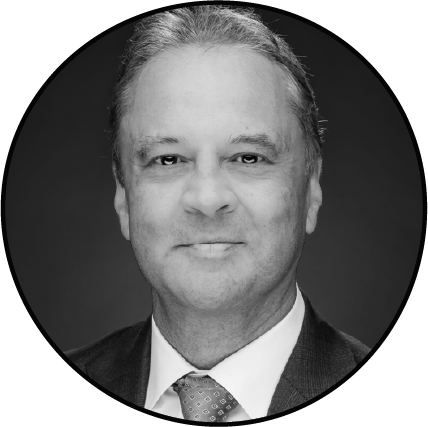
John Pearce, Chief Investment Officer, UniSuper
John joined UniSuper in 2009 and is responsible for the management of their investment functions.
John has over 35 years’ experience in the financial services industry both in Australia and Asia. He has held several senior positions including Chief Executive Officer and General Manager, Investments for Australia's largest asset management company Colonial First State from 2000 to 2006.
From 2006 to 2008 John was the Head of Global Asset Management for Ping An, which is China's second largest insurance company.
John has a degree in economics and a Masters in applied finance. He has also completed a Program for Management Development at Harvard Business School.
John served as a non-executive director on the Treasury Corporation of Victoria Board from 2015 to 2024.

Global Investment Institute is Australia’s leading provider of conferences for capital allocators.
We connect institutional investors, family office and private wealth investment leaders with peers and global investment experts to share knowledge and thought leadership in a private, collegiate and discussion-focussed setting, conducted under Chatham House Rule.
Our upcoming events include:





If you have enjoyed reading this article, please subscribe to GII Insights, delivered monthly, direct to your inbox and it is FREE!
Information current at 27 November 2025.
Disclaimer
The views and opinions expressed in this publication are those of the individual contributors and their respective organisations at the time of publishing. They do not necessarily reflect those of Global Investment Institute (GII). These views are not intended to be, and should not be construed as, investment advice or research. They are subject to change without notice, and no representation is made as to their ongoing accuracy or reliability. Forecasts, forward-looking statements, or opinions are inherently uncertain and based on assumptions, risks, and external factors which may change over time. The individuals interviewed have no obligation to update any statements made.
International investments carry additional risks, including potential loss of capital, currency fluctuations, differences in accounting standards, and economic or political instability.
All information contained in this publication is general in nature and does not take into account the financial objectives, situation, or needs of any individual or organisation. It should not be used as the sole basis for making investment decisions. GII strongly recommends seeking independent, fee-for-service financial advice before acting on any information contained herein.
Contributors, guest writers or interviewees may hold personal or professional financial interests in the investments discussed. The editorial team has assessed that these interests have not influenced the content of this publication.
All content featured in this publication is protected by copyright. No part may be reproduced, distributed, or transmitted in any form without prior written permission from the Global Investment Institute.