Spotlight on Missy Dolski, Partner & Global Head, Asset-Based Finance, Värde Partners
Global Thought Leader Spotlight
Missy Dolski, Partner & Global Head, Asset-Based Finance, Värde Partners

In my role as the Global Head of Asset-Based Finance at Värde Partners, I am responsible for overseeing the firm’s Asset‑Based Finance strategy, focused on middle‑market opportunities across commercial, consumer, and fund finance assets. I lead deal origination, structuring, and portfolio management across the platform.
My role also includes overseeing risk, capital deployment, and overall strategy execution. Additionally, I play a key role in building and scaling the platform through team leadership, platform development, investor engagement, and cross‑functional collaboration.
Prior to leading the Asset‑Based Finance strategy globally, I launched the firm’s fund finance platform and led the Capital Markets team, executing financing solutions across public and private credit markets, as well as relationship management of key accounts across the firm.
Structural demand and technology are reshaping asset-based finance
The continued shift in lending away from banks is driving sustained demand for capital from non‑bank platforms. At the same time, technology is accelerating how consumers and businesses access credit, expanding both the scale and efficiency of asset-based finance opportunities across consumer, commercial, and fund finance markets.
For investors, this creates attractive growth and diversification opportunities, balanced against risks related to platform selection, data integrity, and operational scalability.
Credit protection and asset-level structuring matter later in the cycle
With heightened macro uncertainty and pressure on the consumer, downside protection has become central to underwriting. Capital structures that incorporate embedded credit support, hard asset backing, and data‑driven origination platforms are increasingly critical to achieving attractive risk‑adjusted returns.
Equally important, success in asset-based finance hinges on a robust operational infrastructure and deep, hands-on understanding of the underlying asset classes. As structures grow more complex, execution quality will increasingly determine whether intended protections hold under stress.
Investors benefit from enhanced defensiveness and return durability, while facing risks if structures fail to adequately absorb losses under stress.
Scalable platforms prefer flexible capital and long-term partnerships
Originators are seeking solutions that align with their growth while preserving balance sheet flexibility.
Flexible financing structures, deep asset‑level expertise, and the ability to support platforms across products and cycles are driving durable relationships. This has expanded opportunity sets, including beyond traditional asset-based finance into adjacent areas like fund finance.
This presents investors with opportunities for repeat deployment and attractive economics, alongside risks tied to concentration, alignment, and governance as platforms scale.
Implications for sophisticated investors
For investors, these themes reinforce that asset-based finance is no longer a niche allocation but a strategic portfolio sleeve that requires thoughtful positioning.
The ongoing shift away from bank lending, combined with technology-enabled origination, has broadened access to diversified platforms with stronger data and operating controls. For investors, this creates opportunity but also raises the bar as overexposure to unproven originators or operational bottlenecks carries meaningful risk as the asset class matures.
As the cycle progresses, portfolio construction should balance yield with capital preservation. Senior exposure, robust structural protections, and assets underpinned by demonstrable cash flow or hard collateral support are the foundations of a resilient asset-based finance allocation. In this environment, selectivity in structure and rigorous stress testing matter more than incremental spread. This will be a discipline that separates managers with genuine underwriting depth from those chasing yield.
Underpinning both of these considerations is capital. Specifically, the growing preference for flexible, long-term partnerships that can scale alongside portfolio growth. Concentration management, counterparty diversification, and repeatable deployment frameworks are no longer differentiators, they are table stakes.
Sophisticated platforms with proven governance, monitoring, and alignment across market cycles are best positioned to unlock durable, multi-cycle opportunities across both core asset-based finance and adjacent verticals.
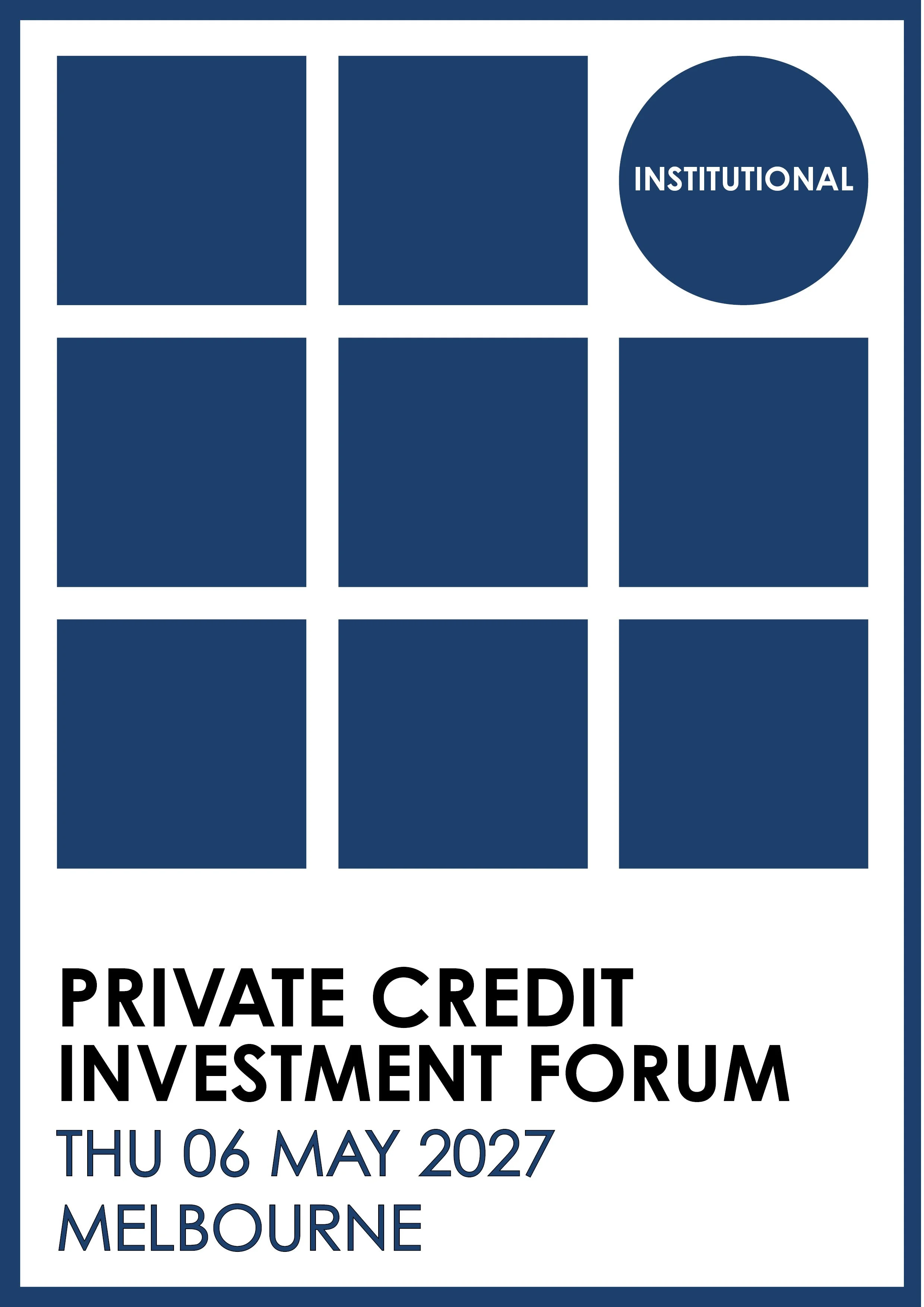
Missy will be presenting at Global Investment Institute’s upcoming Private Credit Investment Forum, taking place on Thursday, 14 May 2026 in Melbourne CBD, Victoria. To register your interest in attending, click here or for more information email zlatan@globalii.com.au.

Missy Dolski, Partner & Global Head, Asset-Based Finance, Värde Partners
Missy is a Partner and Global Head of Asset-Based Finance. She oversees Värde’s Asset-Based Finance strategy, focused on middle-market opportunities across commercial and consumer asset classes as well as fund finance. Prior to leading this strategy on a global basis, Missy launched the firm’s Fund Finance platform, leading that team as well as Värde’s Capital Markets team, where she was responsible for the debt advisory and financing execution needs of the firm’s investing in both public and private debt markets. Missy joined Värde in 2017 and was named Partner in 2025. She is also a member of the firm’s Investment Committee.
Prior to joining Värde, Missy was a Director at Wells Fargo Securities in the Commercial Real Estate Capital Markets & Finance group where she focused on capital markets financing for a variety of non-bank lender clients. Throughout her career, Missy held multiple roles at Wells Fargo within its structured finance, principal investing and corporate credit divisions in New York, London and San Francisco.
She graduated from the Carlson School of Management (University of Minnesota) with a BS in Business Administration and received an MBA with distinction from London Business School.

Global Investment Institute is Australia’s leading provider of conferences for capital allocators.
We connect institutional investors, family office and private wealth investment leaders with peers and global investment experts to share knowledge and thought leadership in a private, collegiate and discussion-focussed setting, conducted under Chatham House Rule.
Our upcoming events include:



If you have enjoyed reading this article, please subscribe to GII Insights, delivered monthly, direct to your inbox and it is FREE!
Disclaimer
The views and opinions expressed in this publication are those of the individual contributors and their respective organisations at the time of publishing. They do not necessarily reflect those of Global Investment Institute (GII). These views are not intended to be, and should not be construed as, investment advice or research. They are subject to change without notice, and no representation is made as to their ongoing accuracy or reliability. Forecasts, forward-looking statements, or opinions are inherently uncertain and based on assumptions, risks, and external factors which may change over time. The individuals interviewed have no obligation to update any statements made.
International investments carry additional risks, including potential loss of capital, currency fluctuations, differences in accounting standards, and economic or political instability.
All information contained in this publication is general in nature and does not take into account the financial objectives, situation, or needs of any individual or organisation. It should not be used as the sole basis for making investment decisions. GII strongly recommends seeking independent, fee-for-service financial advice before acting on any information contained herein.
Contributors, guest writers or interviewees may hold personal or professional financial interests in the investments discussed. The editorial team has assessed that these interests have not influenced the content of this publication.
All content featured in this publication is protected by copyright. No part may be reproduced, distributed, or transmitted in any form without prior written permission from the Global Investment Institute.