Spotlight on Haseeb Malik, Partner & Head of Asia Credit, Värde Partners
Global Thought Leader Spotlight
Haseeb Malik, Partner & Head of Asia Credit, Värde Partners

As Head of Asia Credit at Värde Partners, I am responsible for overseeing the firm’s Asia Credit strategy, focused on performing lending and credit capital solutions in the Asia Pacific region. I lead teams that focus on deal origination, structuring, investing and portfolio management across the platform.
My focus also includes overseeing risk, capital deployment, and overall strategy execution across our key markets. Additionally, I play a key role in building and scaling the platform through team development, platform growth, investor engagement, and cross‑functional collaboration.
Structural capital demand across high-growth markets
Asia’s expanding economies and evolving credit systems are generating substantial, sustained demand for private capital. India stands out, with its credit system projected to grow from US$3 trillion today to over US$5 trillion within the decade. This is underpinned by a decade of meaningful regulatory reform.
Australia, Indonesia, and Singapore each present distinct capital gaps where private lenders can step in as banks selectively withdraw from certain sectors or prudential regulation creates capital gaps.
Barriers to entry and relationship-driven underwriting
Succeeding in Asia private credit requires deep local networks, disciplined underwriting, repeat relationships with large asset owners, and rigorous structuring know-how.
The most compelling opportunities feature solid fundamentals, diverse collateral coverage, tight documentation, and hybrid capital solutions that generate equity-like returns with meaningful downside protection. These are attributes that take years to develop and are difficult for many managers to replicate.
Infrastructure and real assets as a durable pipeline
The region's infrastructure investment cycle remains in full swing. Airports, toll roads, power generation, renewables, and mining-adjacent businesses are producing a deep and visible deal pipeline across India, Indonesia, and Australia.
Current geopolitical and market volatility is expected to further improve deal structures and returns, reinforcing the attractiveness of the asset class.
Implications for sophisticated investors
Asia private credit presents a compelling case for portfolio allocation. The structural capital gaps across India, Australia, and Southeast Asia offer an opportunity to capture meaningful illiquidity premiums that are increasingly difficult to find in more saturated Western markets.
As domestic banking systems face regulatory constraints, managers with established market presence can command superior risk-adjusted returns through hybrid and structured credit solutions. Investors should look to build dedicated allocations to the region rather than treating it as an opportunistic sleeve within a broader global private credit mandate.
Thoughtful portfolio construction within the asset class can also deliver genuine diversification. Infrastructure, renewables, mining, and large conglomerate financing each carry distinct risk and return profiles across different geographies and capital structures.
For institutions managing long-duration liabilities, contracted cash flows from assets such as toll roads and power infrastructure complement shorter-tenor performing loans. Together, these assets offer flexibility in matching liability profiles while maintaining exposure to high-growth economies.
Manager selection is ultimately the most critical risk mitigation tool available to investors in this market. Barriers to entry are real and local network depth, structuring expertise, and long-standing borrower relationships are not easily or built quickly. Investors should prioritise managers with a demonstrated presence on the ground and repeat transaction history in the region. In Asia private credit, access and not just capital is what drives outcomes.
Haseeb will be presenting at Global Investment Institute’s upcoming Private Credit Investment Forum, taking place on Thursday, 14 May 2026 in Melbourne CBD, Victoria. To register your interest in attending, click here or for more information email zlatan@globalii.com.au.
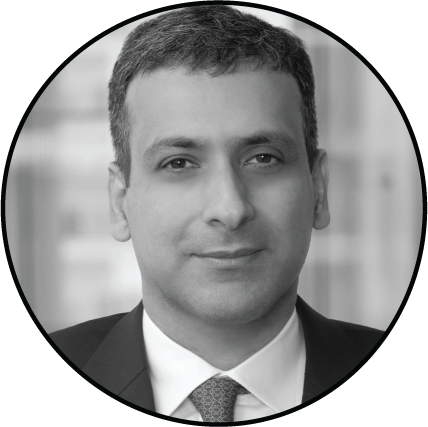
Haseeb Malik, Partner & Head of Asia Credit, Värde Partners
Haseeb Malik is a Partner and Head of Asia Credit. He is a member of the firm’s Investment Committee. Based in Singapore, he joined the firm in 2006, relocated to Singapore in 2008 to assist in opening the office, and was named Partner in 2019.
Prior to joining Värde, Haseeb worked as an Associate at Ripplewood Holdings LLC, a global private equity fund focusing on leveraged buyouts in the U.S. and Japan. Prior to that, Haseeb was an investment banking Analyst at Salomon Smith Barney, where he provided mergers and acquisitions and corporate finance advisory services.
Haseeb received his B.S. in Finance and Accounting from the Wharton School of Business at the University of Pennsylvania and his M.B.A. from Kellogg School of Management at Northwestern University.

Global Investment Institute is Australia’s leading provider of conferences for capital allocators.
We connect institutional investors, family office and private wealth investment leaders with peers and global investment experts to share knowledge and thought leadership in a private, collegiate and discussion-focussed setting, conducted under Chatham House Rule.
Our upcoming events include:





If you have enjoyed reading this article, please subscribe to GII Insights, delivered monthly, direct to your inbox and it is FREE!
Disclaimer
The views and opinions expressed in this publication are those of the individual contributors and their respective organisations at the time of publishing. They do not necessarily reflect those of Global Investment Institute (GII). These views are not intended to be, and should not be construed as, investment advice or research. They are subject to change without notice, and no representation is made as to their ongoing accuracy or reliability. Forecasts, forward-looking statements, or opinions are inherently uncertain and based on assumptions, risks, and external factors which may change over time. The individuals interviewed have no obligation to update any statements made.
International investments carry additional risks, including potential loss of capital, currency fluctuations, differences in accounting standards, and economic or political instability.
All information contained in this publication is general in nature and does not take into account the financial objectives, situation, or needs of any individual or organisation. It should not be used as the sole basis for making investment decisions. GII strongly recommends seeking independent, fee-for-service financial advice before acting on any information contained herein.
Contributors, guest writers or interviewees may hold personal or professional financial interests in the investments discussed. The editorial team has assessed that these interests have not influenced the content of this publication.
All content featured in this publication is protected by copyright. No part may be reproduced, distributed, or transmitted in any form without prior written permission from the Global Investment Institute.