Spotlight on Tom Patrick, Partner, Head of Healthcare Property, Barwon Investment Partners
Global Thought Leader Spotlight
Tom Patrick, Partner, Head of Healthcare Property, Barwon Investment Partners

In my role as Managing Partner and Head of Healthcare Property at Barwon Investment Partners, I am responsible for the strategy, portfolio construction and asset management of the firm’s healthcare real estate investments. This includes sourcing and executing transactions, managing tenant relationships and overseeing capital allocation across the portfolio.
A key focus is identifying opportunities within the healthcare sector that offer defensive income characteristics, supported by long lease structures and non-discretionary demand.
I also work closely with investors to articulate the role of healthcare real estate within diversified portfolios and how it can enhance long-term risk-adjusted returns.
Selective opportunities for real estate allocation
Real estate markets are emerging from a period defined by a significant macroeconomic adjustment. The rapid increase in interest rates post-pandemic led to a repricing across asset classes, with property yields expanding and total returns declining.
As volatility has moderated and yields have stabilised, the market appears to be moving into the early stages of recovery, creating a more constructive backdrop for core real estate investment.
At the same time, there has been a structural evolution within the asset class. Alternative sectors, including healthcare property, have become increasingly relevant as investors seek more resilient income streams. These sectors are underpinned by long-term demand drivers such as ageing populations, increased healthcare expenditure and evolving models of care, which are less sensitive to economic cycles.
However, risks remain. Construction cost, inflation, labour shortages and supply constraints continue to impact development feasibility, while higher funding costs require greater discipline in capital allocation.
Additionally, differentiation between assets and sectors is becoming more pronounced, with performance increasingly driven by asset quality and tenant fundamentals.
For investors, this environment presents a combination of cyclical opportunity and structural change, requiring a more selective and forward-looking approach to real estate allocation.
Implications for sophisticated investors
For institutional investors, the current environment reinforces the importance of disciplined portfolio construction and a long-term investment horizon.
Following the recent repricing, core real estate is again offering more attractive income yields relative to fixed income, restoring its role as a source of stable, defensive cash flow within diversified portfolios.
At the same time, the increasing relevance of alternative sectors suggests that traditional sector allocations may need to evolve. Healthcare property, for example, offers exposure to non-discretionary demand, long lease tenures and, in many cases, CPI-linked rental growth. These characteristics can enhance income stability while reducing correlation with more cyclical property sectors.
Investors should also place greater emphasis on asset selection and active management. In a higher-cost capital environment, outcomes are increasingly dependent on tenant quality, lease structure and the ability to manage assets effectively through the cycle. Passive exposure to broad market beta is less likely to deliver consistent outperformance.
Finally, the current phase of the cycle presents an opportunity to deploy capital at more attractive valuations. For investors able to take a medium- to long-term view, this may represent a compelling entry point into real estate, particularly when combined with selective exposure to structurally supported sectors.
Tom will be presenting at Global Investment Institute’s upcoming Private Wealth Investment Leaders Forum, taking place on Wednesday, 13 May 2026 in Melbourne CBD, Victoria. To register your interest in attending, click here or for more information email zlatan@globalii.com.au.
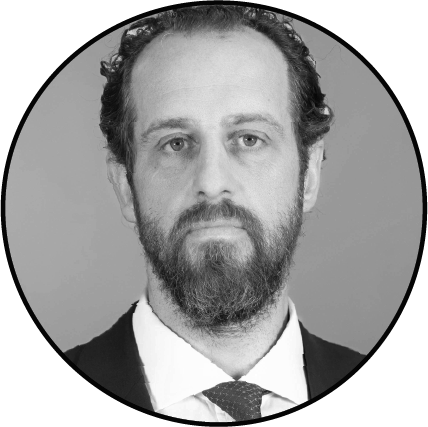
Tom Patrick, Partner, Head of Healthcare Property, Barwon Investment Partners
Tom is a Partner and the Head of Healthcare Property at Barwon Investment Partners (Barwon). He is responsible for the day-to-day management, governance, compliance and key client relationships across the Barwon Group. As a Director and Board Member, Tom is also involved in the strategic direction of Barwon.
Tom is the Fund Manager across all of Barwon’s Healthcare Property Funds including the Barwon Institutional Healthcare Property Fund, Barwon Healthcare Property Fund and Barwon Disability Accommodation Fund.
Tom has over 20 years’ experience in property funds management, advisory and banking in both healthcare and direct commercial property in both domestic and international markets.
Tom is a Responsible Manager for Barwon’s Australian Financial Services License.

Global Investment Institute is Australia’s leading provider of conferences for capital allocators.
We connect institutional investors, family office and private wealth investment leaders with peers and global investment experts to share knowledge and thought leadership in a private, collegiate and discussion-focussed setting, conducted under Chatham House Rule.
Our upcoming events include:



If you have enjoyed reading this article, please subscribe to GII Insights, delivered monthly, direct to your inbox and it is FREE!
Disclaimer
The views and opinions expressed in this publication are those of the individual contributors and their respective organisations at the time of publishing. They do not necessarily reflect those of Global Investment Institute (GII). These views are not intended to be, and should not be construed as, investment advice or research. They are subject to change without notice, and no representation is made as to their ongoing accuracy or reliability. Forecasts, forward-looking statements, or opinions are inherently uncertain and based on assumptions, risks, and external factors which may change over time. The individuals interviewed have no obligation to update any statements made.
International investments carry additional risks, including potential loss of capital, currency fluctuations, differences in accounting standards, and economic or political instability.
All information contained in this publication is general in nature and does not take into account the financial objectives, situation, or needs of any individual or organisation. It should not be used as the sole basis for making investment decisions. GII strongly recommends seeking independent, fee-for-service financial advice before acting on any information contained herein.
Contributors, guest writers or interviewees may hold personal or professional financial interests in the investments discussed. The editorial team has assessed that these interests have not influenced the content of this publication.
All content featured in this publication is protected by copyright. No part may be reproduced, distributed, or transmitted in any form without prior written permission from the Global Investment Institute.