Spotlight on Lewis Grant, Senior Portfolio Manager, Global Equities, Federated Hermes Limited
Global Thought Leader Spotlight
Lewis Grant, Senior Portfolio Manager, Global Equities, Federated Hermes Limited
In my role as Senior Portfolio Manager at Federated Hermes Limited I am responsible for designing and implementing quantitative systems aimed at maximising risk-adjusted returns across global equity strategies.
Markets are never static, and what worked yesterday can fail tomorrow. I lead the team’s research efforts to ensure our alpha generation process and risk management tools remain effective.
Reflecting on lessons learned over my 20+ year career, I recognise that all models have limitations, so we rigorously challenge our quantitative framework with a disciplined fundamental overlay. This challenge is often the most interesting and varied part of my role and is typically the catalyst for the next phase of our quantitative model enhancements.
The benefits of A.I. for equity investors
While significant societal questions and challenges remain, A.I. represents an era-defining technological shift that is supporting a secular opportunity for equity investors, one that is only just beginning to be realised. Optimism around corporate earnings is justified: in the near term, the benefits of A.I. are emerging through significant capital investment, while over the longer term they should be reflected in improved productivity, efficiency and margins across the economy. Such is the strength of this narrative that equity markets have, for the most part, shrugged off nearer-term threats that might otherwise dominate the news cycle, including conflict in the Middle East, unpredictable trade policy and a geopolitical backdrop more unsettled than anything experienced in decades.
This bullish behaviour, however, may be masking a deeper vulnerability. The structure of equity markets in 2026 differs markedly from that at the start of my career. Major indices are increasingly concentrated, resulting in narrower market leadership and a less diversified set of outcomes.
That matters not only for active investors, but for passive investors too, who may need to pay closer attention to exactly which index they track, how that index is constructed and whether evolving IPO and inclusion rules still deliver the exposure they expect. At the same time, a more permissive market backdrop is allowing weaker governance and lower-quality issuance to be overlooked.
More broadly, the rise of social media-driven market behaviour has reinforced a short-term focus that can distract from the real long-term opportunity still unfolding.
Opportunities for sophisticated investors
Investors need to be more deliberate in how risk is measured, diversified and controlled. The opportunity presented by A.I. is real, but the combination of narrow market leadership, elevated index concentration and faster-moving market narratives means that traditional risk tools, many of which were designed for a more stable market structure, are no longer sufficient on their own. Backward-looking measures and static portfolio frameworks can miss how quickly correlations, leadership and liquidity conditions now change.
In that environment, the case for a genuinely diversified, lower-risk portfolio becomes stronger, not weaker. Diversification today is not simply about holding more names or allocating across more active managers, but about avoiding unintended concentrations in the same themes, factors and governance risks that increasingly dominate benchmark returns. Investors need to look through labels and reassess whether their portfolios are truly balanced across underlying drivers of risk.
This requires more flexible and dynamic risk systems, combining quantitative discipline with forward-looking judgement. Portfolio construction, scenario analysis and risk budgeting need to adapt more quickly to changing market conditions, rather than relying solely on historical relationships to hold. The goal is not to dilute exposure to long-term upside, but to build portfolios that are resilient enough to stay invested through a market that is simultaneously presenting structural opportunity and growing fragility.
Lewis will be presenting at Global Investment Institute’s upcoming Equities Investment Forum on Wednesday, 2 September 2026 in Melbourne CBD, Victoria. To register your interest in attending, click here or for more information email zlatan@globalii.com.au.
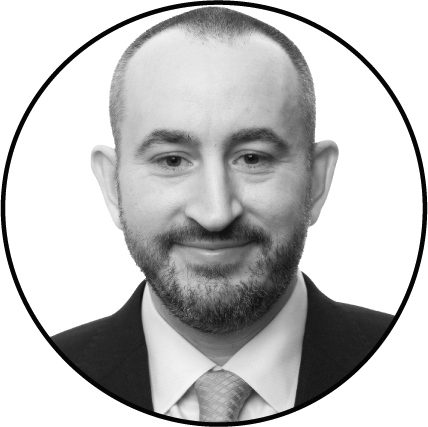
Lewis Grant, Senior Portfolio Manager, Global Equities, Federated Hermes Limited
Lewis joined Federated Hermes Limited in February 2008 as a portfolio manager on the Global Equities team. In addition to his role as portfolio manager, Lewis is responsible for designing and implementing many of the team's systems. In particular, he created the proprietary risk-modelling system, MultiFRAME, which is used across all investment teams based in London.
Lewis joined from Aon Consulting, where he worked as an actuarial consultant specialising in providing valuations and asset-liability modelling to a range of corporate and institutional clients.
Lewis graduated from the University of Warwick in 2003 with a Master's degree in Mathematics, Operational Research, Statistics and Economics and subsequently qualified as a Fellow of the Institute of Actuaries.

Global Investment Institute is Australia’s leading provider of conferences for capital allocators.
We connect institutional investors, family office and private wealth investment leaders with peers and global investment experts to share knowledge and thought leadership in a private, collegiate and discussion-focussed setting, conducted under Chatham House Rule. Attendance is by invitation-only.
We host private gatherings for investment leaders across three distinct segments:
Institutional
Family Offices
Private Wealth (institutional-scale)
Each segment has its own series of dedicated events for delegates to connect with peers and we have an unrivalled network of capital allocators who we invite to attend.
UPCOMING EVENTS