Spotlight on Kevin Donohoe, Head of Research, Abbey Capital
Global Thought Leader Spotlight
Kevin Donohoe, Head of Research, Abbey Capital

As Head of Research at Abbey Capital and a member of the Investment Committee, I help oversee the evolution and implementation of the firm’s day-to-day investment process. My responsibilities span manager selection and due diligence, portfolio construction, and ongoing portfolio management, with a focus on ensuring that investment decisions are underpinned by rigorous analysis and aligned with client objectives.
I also engage extensively with existing and prospective investors to understand their return, risk and diversification requirements. This dialogue helps us assess how our strategies can best complement broader institutional portfolios and align our research and portfolio management processes with investors’ long-term objectives.
Risks and opportunities in managed futures
The central development for managed futures is not a single macroeconomic forecast, but the possibility that the pillars supporting risk assets for the past 30–40 years are shifting.
First, the long structural decline in interest rates may be giving way to a less certain regime. Persistent inflation risk and elevated debt-to-GDP ratios could place upward pressure on yields and increase volatility across rates, currencies and equities.
Second, globalisation and economic integration are being challenged by geopolitical fragmentation, reshoring, tariffs and trade restrictions. These forces may reshape supply chains and create greater dispersion in growth, inflation and market outcomes across countries.
Third, A.I. is accelerating technological change. Its long-term effects remain uncertain, but it could materially reshape productivity, corporate profitability, labour markets and capital allocation, creating major winners and losers and the potential for disruptive market repricing.
Finally, the negative equity-bond correlation underpinning portfolio diversification over the past two decades has become less dependable. The re-emergence of positive correlation may leave many portfolios exposed to common macroeconomic shocks.
For managed futures, these shifts create risks, including abrupt reversals and directionless markets, but also opportunities. The asset class can take long and short positions across liquid markets, while cyclical and structural change can produce sustained trends and cross-market divergence. In this environment, managed futures can serve not merely as a defensive allocation but as a differentiated source of return. They need not predict the final shape of a new regime; they can respond to the trends and repricing that emerge as it evolves.
Opportunities for sophisticated investors
The key implication for institutional investors is that the changing environment may encourage a broader view of portfolio construction, one that looks beyond asset-class labels and historical correlations to the exposures and return drivers within each allocation. If these established relationships become less reliable, investors may revisit what they expect equities, bonds and alternatives to deliver - growth, income, liquidity, downside resilience or differentiated returns - and assess whether those roles will hold across a range of inflation, interest-rate and geopolitical outcomes.
This may place greater emphasis on diversification by return driver rather than asset class alone, and on strategies able to take long and short positions across markets and respond to trends and divergence as they emerge. Managed futures can play that role but are better viewed as a strategic allocation than as a short-term hedge. Their value lies in the potential to provide a liquid, differentiated source of return when sustained trends develop, including when equity and bond risks become more correlated.
Implementation and expectation-setting are equally important. Relevant considerations include the breadth of markets traded, the diversity of managers and signals, likely behaviour during abrupt reversals or range-bound markets, and the role and sizing of the allocation within the total portfolio. A multi-manager approach may help reduce reliance on any single model or investment style.
Ultimately, the emphasis is less on predicting the next regime precisely and more on the potential value of multiple, genuinely distinct return engines in creating portfolio resilience across a broader range of outcomes.
Kevin will be presenting at Global Investment Institute’s upcoming Family Office Investment Forum on Tuesday, 1 September 2026 in Melbourne CBD, Victoria. To register your interest in attending, click here or for more information email zlatan@globalii.com.au.
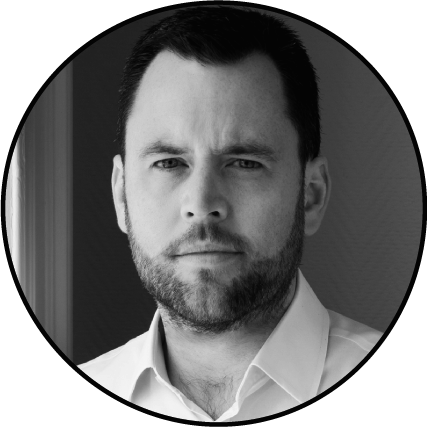
Kevin Donohoe, Head of Research, Abbey Capital
Kevin is Head of Research at Abbey Capital, an alternative investment management firm based in Dublin, Ireland. In this role, Kevin oversees the firm’s CTA analysis and due diligence processes, leads the Research Analysts and Portfolio Research teams, and helps shape Abbey Capital’s broader research agenda. As a member of the Investment Committee, he plays a key role in portfolio construction, CTA evaluation, and investment decision-making.
Kevin joined Abbey Capital in 2013, bringing with him experience in quantitative risk analysis and derivatives trading. Since then, he has played a central role in evolving and enhancing the firm’s due diligence framework and investment process.
Kevin holds a Bachelor of Business and Legal Studies from University College Dublin and an M.Sc. in Finance and Capital Markets from Dublin City University. His cross-disciplinary background in trading, risk, and fundamental research underpins his strategic leadership in developing robust, diversified portfolios grounded in data-driven CTA selection.

Global Investment Institute is Australia’s leading provider of conferences for capital allocators.
We connect institutional investors, family office and private wealth investment leaders with peers and global investment experts to share knowledge and thought leadership in a private, collegiate and discussion-focussed setting, conducted under Chatham House Rule. Attendance is by invitation-only.
We host private gatherings for investment leaders across three distinct segments:
Institutional
Family Offices
Private Wealth (institutional-scale)
Each segment has its own series of dedicated events for delegates to connect with peers and we have an unrivalled network of capital allocators who we invite to attend.
UPCOMING EVENTS