Spotlight on Francisco De Juan, Managing Partner & EQMC CIO, Alantra EQMC Asset Management
Global Thought Leader Spotlight
Francisco De Juan, Managing Partner & EQMC Chief Investment Officer, Alantra EQMC Asset Management

In my role as Chief Investment Officer of Alantra EQMC AM, I lead a hands-on, constructive engagement strategy that brings private equity-style value creation to pan-European listed small caps (up to €2 billion market cap). EQMC runs a concentrated, high-conviction portfolio of around 15 companies, taking relevant minority stakes in exceptional businesses while maintaining a strict value discipline.
Our team of 15 investment professionals, together with a wide network of senior advisors, draw on deep expertise across corporate finance, strategic consulting, and broad industry experience. We apply our background to a rigorous due diligence framework for idea generation and risk control, and we engage actively with management teams, boards and other shareholders to help accelerate operational and strategic value creation.
European small caps vs large caps
European small caps are a particularly attractive hunting ground for new ideas. The investable universe of roughly 2,000 companies below the €2 billion market-cap threshold offers higher growth potential, with more than twice as many businesses generating ROCE above 15% compared to large caps. The segment is also much less efficiently priced: thinner sell-side coverage and weaker investor communication create more frequent mispricing and wider price-value gaps.
High corporate activity from both strategic buyers and financial sponsors provides additional catalysts to accelerate value creation and crystallise returns. Underpinned by these dynamics, European small caps have historically outperformed large caps.
The turbulence of the past five years has materially disrupted these trends, both in fundamentals and valuations. Covid, the war in Ukraine, the energy shock, elevated inflation, and sharply higher interest rates have pressured volumes and margins, particularly among export-oriented industrials. Against this backdrop, small-cap performance and valuation multiples have de-rated and now trade at a discount to their own history and to large caps, despite historically commanding a premium.
More recently, we have seen incipient unwinding of these headwinds. Cooling inflation and easing rates are beginning to revive private investment, despite temporary delays from US trade volatility.
Europe’s reactivated fiscal stance, most notably Germany’s €1 trillion stimulus package, is also improving sentiment and supporting a firmer demand backdrop. In this context, we are seeing early signs of capital rotating back into Europe after prolonged under-allocation.
Historically, these flows tend to benefit large caps first before cascading into small caps, which could be particularly meaningful for the latter, as they have historically outperformed in the recovery phase, following periods of elevated stress.
Implications for sophisticated investors
European small caps are a fundamentally attractive long-term exposure while the current set up provides a potentially highly attractive entry. However, this is unlikely to be captured efficiently through broad, passive exposure.
The opportunity is increasingly driven by dispersion: valuation gaps remain wide, fundamentals are normalising unevenly, and corporate activity is likely to be episodic and company-specific. In that environment, portfolio construction and concentration matter as much as factor exposure.
A sensible position to take is to tilt towards quality at a reasonable price; businesses with strong USPs, high barriers to entry, proven pricing power, and balance sheets that can absorb a still-uncertain macro backdrop; while being selective on cyclicals where operating leverage can help, but downside risks require monitoring. Given the lagged transmission of easing rates and the sensitivity of smaller companies to funding conditions, investors can prioritise balance-sheet resilience and funding flexibility, focusing on businesses that can keep investing through the cycle without relying on optimistic refinancing assumptions.
Active ownership can be particularly effective for accelerating value creation and mitigating key risks. With thinner coverage, investors who do the work can reduce information risk and avoid structural losers. Rather than relying only on broad multiple expansion, constructive engagement can also improve the likelihood that catalysts crystallise (e.g., capital allocation discipline, operational excellence, governance upgrades, or strategic optionality), particularly in small caps, where first-time CEOs are common.
Finally, in a market where outcomes are driven by execution and idiosyncratic events, ongoing dialogue with all stakeholders can ensure alignment with a shareholder value perspective through deployment of an active toolkit. Meanwhile, it also serves to sharpen risk control by identifying early signals of deviation from plan and enabling faster, better-informed portfolio decisions.
Francisco will be presenting at Global Investment Institute’s upcoming Family Office Investment Forum, taking place on Thursday, 19 March 2026 in Melbourne CBD, Victoria. To register your interest in attending, click here or for more information email zlatan@globalii.com.au.
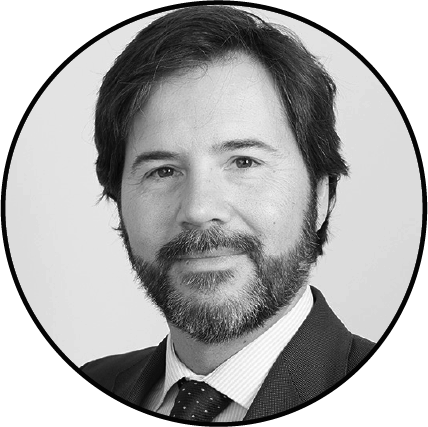
Francisco De Juan, Managing Partner & EQMC Chief Investment Officer, Alantra EQMC Asset Management
Francisco is an active investor in European public equities. He is the CIO of the EQMC Fund since its 2010 inception and Managing Partner of Alantra EQMC Asset Management.
With over 25 years of cross-disciplinary experience, Francisco combines extensive expertise in active investing in public equities with his background as a top-ranked equity research analyst (Cheuvreux), investment banker (Lehman Brothers) and a small-time as an auditor. He is a strong believer of deep-dive fundamental analysis and holds a vast experience constructively engaging with European small/mid-caps. The EQMC fund has been granted multiple international awards under his watch in recent years due to its top performance.
Francisco holds a double degree in Law & Business in ICADE (E-3), Madrid (Spain). He collaborates as a lecturer at the IE Business School teaching his course on “Creating value through active ownership“. He has participated in several nomination committees for EQMC’s portfolio companies. He currently serves as a board member at Guala Closures.

Global Investment Institute is Australia’s leading provider of conferences for capital allocators.
We connect institutional investors, family office and private wealth investment leaders with peers and global investment experts to share knowledge and thought leadership in a private, collegiate and discussion-focussed setting, conducted under Chatham House Rule.
Our upcoming events include:





If you have enjoyed reading this article, please subscribe to GII Insights, delivered monthly, direct to your inbox and it is FREE!
Disclaimer
The views and opinions expressed in this publication are those of the individual contributors and their respective organisations at the time of publishing. They do not necessarily reflect those of Global Investment Institute (GII). These views are not intended to be, and should not be construed as, investment advice or research. They are subject to change without notice, and no representation is made as to their ongoing accuracy or reliability. Forecasts, forward-looking statements, or opinions are inherently uncertain and based on assumptions, risks, and external factors which may change over time. The individuals interviewed have no obligation to update any statements made.
International investments carry additional risks, including potential loss of capital, currency fluctuations, differences in accounting standards, and economic or political instability.
All information contained in this publication is general in nature and does not take into account the financial objectives, situation, or needs of any individual or organisation. It should not be used as the sole basis for making investment decisions. GII strongly recommends seeking independent, fee-for-service financial advice before acting on any information contained herein.
Contributors, guest writers or interviewees may hold personal or professional financial interests in the investments discussed. The editorial team has assessed that these interests have not influenced the content of this publication.
All content featured in this publication is protected by copyright. No part may be reproduced, distributed, or transmitted in any form without prior written permission from the Global Investment Institute.