Exclusive interview with Brad Dunstan, Co-Chief Investment Officer, NZ Super Fund
Global Investment Insights
with Brad Dunstan, Co-Chief Investment Officer, NZ Super Fund
Brad joined the New Zealand Super Fund in September 2013 and was appointed Co-Chief Investment Officer in 2024. He was previously Head of Portfolio Completion.
Prior to joining the Super Fund, Brad had worked for Cannacord Genuity in London as Co-Head of European Equity Derivatives. Brad spent 11 years working in London for various investment banks including Bear Stearns and JP Morgan.
In this exclusive interview with Global Investment Institute, Brad explains how the Fund’s new Co-Chief Investment Officer structure works in practice, how the Total Portfolio Approach enhances returns, and how the team balances passive and active management to add value. He shares which asset classes currently offer the most attractive opportunities, where risks are forming, and how longer-term themes like technology, AI, the energy transition, and critical minerals are shaping the portfolio.
Q. Your organisation recently moved to a Co-Chief Investment Officer model. Can you share how this structure works in practice for managing the portfolio, and how it operates in appointing external managers?
A. Our Co-CIO model represents a joint delegation between Will Goodwin and myself. This structure is critical to the successful implementation of our Total Portfolio Approach (TPA), ensuring that we manage the portfolio as a single entity rather than bifurcating it into separate parts.
Historically, the investment team has operated with two leadership roles, and this model formalises those roles into a shared delegation. While operational efficiency requires separate reporting lines, typically along public and private market divisions, all major portfolio decisions are made jointly, with Will and I consulting and agreeing before proceeding.
We operate within a highly devolved delegation framework. Will and I determine which opportunities to pursue, while manager appointments are delegated to the Heads of each asset class.
Q. In your experiences to date, what makes the Total Portfolio Approach more effective than a traditional siloed model, and how does that improve the Fund’s ability to deliver returns?
A. The TPA provides the flexibility to take a more dynamic stance on asset allocation, enabling us to respond effectively to market opportunities. At the New Zealand Superannuation Fund (NZSF), we have been on a journey to implement TPA since introducing our Reference Portfolio in 2010.
While it is challenging to directly attribute returns to TPA, the approach plays a critical role in constructing the optimal portfolio from the ground up in a flexible and adaptive manner.
TPA is both a philosophy and a process - it reflects not only how we invest but also the way we invest. It relies on a culture of collaboration, aligned incentives, and healthy competition for capital. That said, TPA is not a universal solution; it may not suit all funds. My advice is for organisations to adopt an approach that aligns with their mandate, purpose, culture, and operating environment.
Q. How do you balance passive and active management within the portfolio, and where do you feel your active budget delivers most value?
A. Our starting point is the Reference Portfolio (RP), which is fully passive and highly liquid. From this foundation, we deploy an active risk budget to investments that we believe will deliver superior risk-adjusted returns relative to the RP.
Importantly, even when we take active positions, implementation may still be executed passively.
At NZSF, we hold a core investment belief that skill in security selection is rare. This does not mean we avoid skilled managers; rather, we separate two distinct decisions:
Where to allocate active risk - identifying exposures that best enhance the portfolio.
How to implement those exposures - choosing between active or passive execution based on efficiency and cost-effectiveness.
This disciplined approach ensures that active risk is deployed where it adds the most value, while implementation remains pragmatic and aligned with our long-term objectives.
Q. Which asset classes are you currently seeing the most attractive risk-adjusted opportunities? Conversely, which asset classes are you seeing risks forming and how are you managing them?
A. We monitor multiple markets, including equities, which we currently view as fairly valued. The significant flow of capital into private credit has compressed spreads, and as a result, our allocation to credit remains minimal. The most compelling opportunities lie in monetising our balance sheet by optimising the use of passive listed holdings as collateral and pursuing alpha-generating strategies such as risk-transfer trades, particularly where economic risk is misaligned with regulatory risk pricing.
Q. What longer-term thematics are shaping your investment strategy and how are you expressing those themes within the portfolio (e.g. Technology/A.I., energy transition, critical minerals)?
A. At NZSF, we have rarely adopted a thematic investment approach. Our returns are primarily driven by macro factors, enabling us to take positions when we observe prices diverging from our view of long-term value. Through our TPA, we have maintained an opportunistic stance, focusing on identifying undervalued assets and understanding the fundamental drivers of their value. While this sometimes leads us to similar outcomes as thematic investors, such as investments in data centres or renewable energy, our process begins with a bottom-up assessment rather than a top-down thematic view.
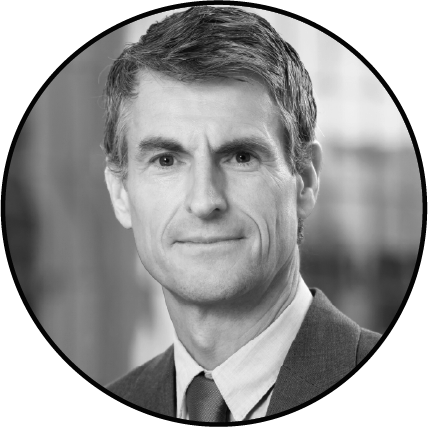
Brad Dunstan, Co-Chief Investment Officer, NZ Super Fund
Brad joined the Guardians in September 2013 and was appointed Co-Chief Investment Officer in 2024. He was previously Head of Portfolio Completion.
Prior to joining the Guardians Brad had worked for Cannacord Genuity in London as Co-Head of European Equity Derivatives. Brad spent 11 years working in London for various investment banks including Bear Stearns and JP Morgan.
Brad holds a BCom from the University of Canterbury and a Post Graduate Diploma in Management. He is a member of the New Zealand Institute of Directors.

Global Investment Institute is Australia’s leading provider of conferences for capital allocators.
We connect institutional investors, family office and private wealth investment leaders with peers and global investment experts to share knowledge and thought leadership in a private, collegiate and discussion-focussed setting, conducted under Chatham House Rule.
Our upcoming events include:





If you have enjoyed reading this article, please subscribe to GII Insights, delivered monthly, direct to your inbox and it is FREE!
Information current at 27 November 2025.
Disclaimer
The views and opinions expressed in this publication are those of the individual contributors and their respective organisations at the time of publishing. They do not necessarily reflect those of Global Investment Institute (GII). These views are not intended to be, and should not be construed as, investment advice or research. They are subject to change without notice, and no representation is made as to their ongoing accuracy or reliability. Forecasts, forward-looking statements, or opinions are inherently uncertain and based on assumptions, risks, and external factors which may change over time. The individuals interviewed have no obligation to update any statements made.
International investments carry additional risks, including potential loss of capital, currency fluctuations, differences in accounting standards, and economic or political instability.
All information contained in this publication is general in nature and does not take into account the financial objectives, situation, or needs of any individual or organisation. It should not be used as the sole basis for making investment decisions. GII strongly recommends seeking independent, fee-for-service financial advice before acting on any information contained herein.
Contributors, guest writers or interviewees may hold personal or professional financial interests in the investments discussed. The editorial team has assessed that these interests have not influenced the content of this publication.
All content featured in this publication is protected by copyright. No part may be reproduced, distributed, or transmitted in any form without prior written permission from the Global Investment Institute.