Exclusive interview with Mark Rider, Former Chief Investment Officer, Brighter Super
Global Investment Insights
with Mark Rider, Former Chief Investment Officer, Brighter Super

Mark Rider was the Chief Investment Officer at Brighter Super from February 2022 until December 2025. Prior to finishing his tenure with Brighter Super, Mark shared his perspectives on a range of topics in an exclusive interview with us at Global Investment Institute.
In this interview, Mark shares how investors can navigate the “Four Horsemen of the Investment Apocalypse”: plague, war, inflation, and asset bubbles; how portfolio construction has evolved in the post zero-rate environment; his approach to balancing geopolitical risks; and, reveals strategic insights for boards navigating current macro volatility and regulatory evolution.
For background, during his tenure at Brighter Super, Mark was responsible for managing the investments team and for the delivery of investment outcomes across the Fund’s range of superannuation investment options.
Mark has almost 40 years of experience in the financial services industry. He started his career at the Reserve Bank of Australia and was a winner of its prestigious postgraduate scholarship. He has worked in various leadership roles, including as the Australian Chief Economist for UBS Investment Bank, the Chief Investment Officer (CIO) for wealth and private banking at ANZ, and as the CIO of Christian Super.
During his previous role as the CIO at Christian Super, and again at Brighter Super, Mark had led a team that delivered a significant improvement in investment performance.
Q. We're facing what you call the "Four Horsemen of the Investment Apocalypse" – plague, war, inflation, and asset bubbles. How should investors approach portfolio construction in this environment?
A. When you look over the past century and identify the trend in real returns for a 70/30 Australia or United States portfolio, real returns are well below the 5.5% average when we have at least one of the “Four Horsemen”. Inflation is the most common and has often been accompanied by war.
Overvaluation and plague have both featured twice. In recent years we have had elements of all four of these. However, inflation and COVID impacts have been short lived so far and we only now seem to be verging on the overvaluation stage.
Inflation is the most concerning for its enduring impact on growth asset valuations. Equities derate on a sustained higher trend inflation rate. Asset classes such as infrastructure can help hedge some of this risk given their inflation protection capabilities, but we still need to be awake to the risk of higher real discount rates on all duration assets and changing correlations.
Q. With the return of inflation and the end of zero rates, how has your approach to asset allocation evolved from the low-rate environment of the past decade?
A. At Brighter Super over the past four years, we made a number of changes to the portfolio to deal with this.
Firstly, there was a large position in credit when I joined the fund, with very little investment grade debt. As interest rates rose and credit spreads contracted, we took the opportunity to reverse this positioning. We have also added to the cash allocation as its now an investable asset class again, not just a source of liquidity.
Secondly, we have looked to build greater resilience in our fund by increasing the allocation to unlisted infrastructure, with its defensive growth characteristics and inflation hedging potential.
Thirdly, we have taken a more total portfolio perspective of our options, considering what each asset class and individual investment brings to the exposures and risk of the fund.
Fourthly, in the past 12 months we have started to rebuild our exposure to the property sector after a significant decline in capital value on the back of higher real interest rates.
Q. Given ongoing wars in Europe and the Middle East, and President Trump's return, how do you balance geopolitical risk assessment with advising members to stay invested through volatility?
A. Keeping our members calm and staying invested has been a major objective this year. My career has spanned almost four decades, from the 1987 stock market crash to the rise of the Magnificent 7 and AI. I’ve experienced a range of bull and bear markets over this period of time as well as economic booms and recessions.
It’s important for members to realise that volatility in financial markets and their super is a fact of life. But equally important is that over the longer run the trend is for positive returns.
Timing the market, both up and down drafts, can be incredibly challenging and remaining invested through these periods of volatility is the best approach. Just look at the fall in the market around US “Liberation Day” on 2 April and the subsequent rebound on 9 April. We build our investment options by diversifying across asset classes to help them navigate the wild swings which will inevitably happen.
All of these periods of crisis are different in some way, but the one common outcome is that investors who have held the course and remained invested have been able to experience both sides of market volatility, building their retirement nest egg through strong, long run returns.
Q. Drawing on your experience across central banking, asset management, and super fund leadership, what strategic insights are most valuable for boards navigating current macro volatility and regulatory evolution?
A. The big picture matters. While a focus on the return potential and the characteristics of individual assets is critical, it is also essential to be aware of the forces that are driving each asset relative to others. These factors may be a style (e.g. growth, value, quality etc) but also underlying economic variables such as inflation, interest rates and technological change. Building a diversified portfolio is all about understanding the myriads of links that exist.
Across my career I’ve taken a more top-down perspective of the world, viewing markets as being driven by economic fundamentals, styles of investment, market sentiment and behavioural biases. This also means it’s valuable having an appreciation of the full distribution of possible events that comes with age and the studying of history – the world is not always like recent experience.
Q. As you transition into non-executive director and advisory roles, what insights from your executive experience do you believe are most valuable for boards and organisations today?
A. I’ve spent a lot of the past decade reviewing and uplifting investment governance frameworks across a number of organisations. This is a critical step in the governance of the fund’s investments, ensuring members best financial interest is served. But it is not a journey that is ever fully completed. Best practice evolves over time with or without regulator interventions, so it’s essential to regularly review and evolve the governance framework.
Also, given the complexity of modern superannuation portfolios and the trend to internal management, deep investment expertise is increasingly important at the Board and Investment Committee level to ensure effective governance oversight of the material investment risks members are exposed to.
Stress testing of investment and liquidity risks for funds has increasingly been a focus of APRA and is critical in the increasingly volatile geopolitical, economic and market environment we are in.
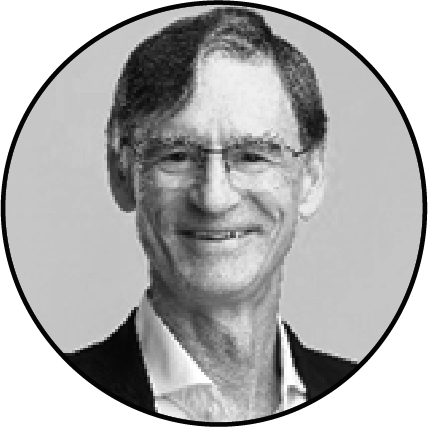
Mark Rider, Former Chief Investment Officer, Brighter Super
Mark Rider was Chief Investment Officer for Brighter Super from February 2022 to December 2025. He was responsible for the delivery of investment outcomes across Brighter Super’s range of superannuation investment options and for managing the Investments team.
Mark has almost 40 years of experience in the financial services industry. He started his career at the Reserve Bank of Australia and was a winner of its prestigious postgraduate scholarship.
He has worked in various leadership roles, including as the Australian Chief Economist for UBS Investment Bank, the Chief Investment Officer (CIO) for wealth and private banking at ANZ, and as the CIO of Christian Super.
During his previous role as the CIO at Christian Super, and again at Brighter Super, Mark has led a team that has delivered a significant improvement in investment performance. Returns for Brighter Super’s MySuper option were in the top quartile of SuperRatings’ SR MySuper Index for three years to 31 October 2025, reflecting the success of the fund since the LGIAsuper and Energy Super merger in 2021.
Mark’s qualifications include Master of Science (Economics) and Bachelor of Economics (Hons).

Global Investment Institute is Australia’s leading provider of conferences for capital allocators.
We connect institutional investors, family office and private wealth investment leaders with peers and global investment experts to share knowledge and thought leadership in a private, collegiate and discussion-focussed setting, conducted under Chatham House Rule.
Our upcoming events include:



If you have enjoyed reading this article, please subscribe to GII Insights, delivered monthly, direct to your inbox and it is FREE!
Information current at 27 November 2025.
Disclaimer
The views and opinions expressed in this publication are those of the individual contributors and their respective organisations at the time of publishing. They do not necessarily reflect those of Global Investment Institute (GII). These views are not intended to be, and should not be construed as, investment advice or research. They are subject to change without notice, and no representation is made as to their ongoing accuracy or reliability. Forecasts, forward-looking statements, or opinions are inherently uncertain and based on assumptions, risks, and external factors which may change over time. The individuals interviewed have no obligation to update any statements made.
International investments carry additional risks, including potential loss of capital, currency fluctuations, differences in accounting standards, and economic or political instability.
All information contained in this publication is general in nature and does not take into account the financial objectives, situation, or needs of any individual or organisation. It should not be used as the sole basis for making investment decisions. GII strongly recommends seeking independent, fee-for-service financial advice before acting on any information contained herein.
Contributors, guest writers or interviewees may hold personal or professional financial interests in the investments discussed. The editorial team has assessed that these interests have not influenced the content of this publication.
All content featured in this publication is protected by copyright. No part may be reproduced, distributed, or transmitted in any form without prior written permission from the Global Investment Institute.