Spotlight on Dylan Ross, Managing Director, Portfolio Manager & Head of Asset-Backed Finance, TCW
Global Thought Leader Spotlight
Dylan Ross, Managing Director, Portfolio Manager & Head of Asset-Backed Finance, TCW

In my role as the Head of Asset-Backed Finance at TCW, I am responsible for origination, due diligence, and portfolio construction across a wide range of asset‑backed sectors, including consumer credit, residential mortgage credit, commercial lending, hard assets, financial assets, and real estate.
I spend a lot of time working with issuers and structurers on new opportunities, as well as with investors to explain our strategies, walk through portfolios, and discuss how we’re positioning across market cycles.
My focus is on disciplined underwriting, thoughtful structuring, and building diversified, resilient portfolios.
Key developments in asset-backed finance
First, recent events such as the Market Financial Solutions (MFS) situation have sharpened focus on structural and governance risk in Asset-Backed Finance (ABF) rather than macroeconomic stress.
Based on public reporting, the concerns appear tied to weaknesses in collateral oversight, cash‑flow monitoring, and entity‑level controls, rather than a systemic issue across asset‑backed finance.
While we do not view double pledging as endemic to ABF, this episode reflects late‑cycle behaviour as capital has chased the asset class, increasing the importance of rigorous diligence and transparency.
Second, infrastructure and operational discipline are key differentiators in ABF. Successfully underwriting of these assets requires deep corporate finance and structured finance expertise, particularly within wholesale‑funded financial businesses.
Continuous, auditable reconciliation of collateral and cash flows, across special purpose vehicles (SPVs) and the broader business, is mission critical. This process must be ongoing, independently verified, and embedded in the investment framework, rather than relying on manual or fragmented reporting.
Third, we believe underwriting quality matters more than position in the capital structure. Seniority alone does not mitigate risk if the collateral, business model, or internal controls cannot be validated. Structuring is not a substitute for diligence; without confidence in the collateral and cash flows, capital stack positioning becomes irrelevant.
Finally, while investor concerns around private credit quality and vehicle liquidity are valid, ABF strategies are well suited to semi‑liquid structures.
Diversified collateral pools and naturally amortising assets support conservative portfolio construction with meaningful liquidity buffers.
In our view, these characteristics create resilience and opportunity for long‑term investors willing to focus on transparency, controls, and disciplined risk management.
Implications for sophisticated investors
We believe that investors should focus on how asset‑based strategies are underwritten, structured, and monitored, particularly following a period of abundant growth capital and heightened competition for yield.
From a portfolio positioning perspective, investors should prioritise managers with robust infrastructure and disciplined processes that provide direct transparency into collateral and cash flows. Ongoing reconciliation across all financing facilities, supported by audited financials, third‑party field exams, and independent verification, is critical to identifying discrepancies early and mitigating risks such as asset duplication or cash diversion.
Structural and legal protections, including true sale into bankruptcy‑remote SPVs, perfected security interests, and the use of independent custodians, trustees, and backup servicers, remain especially important in downside scenarios.
Despite recent headlines, we believe the current environment represents an attractive entry point into asset‑backed finance. ABF can offer diversification away from corporate credit, higher spreads relative to comparable public fixed income, lower volatility, and incremental margins of safety through bespoke structures and credit enhancements.
With constrained bank and insurance lenders providing senior capital and non‑bank mezzanine capital offering incremental leverage, higher yields, and tighter covenants, opportunities continue to expand as traditional lenders retreat from an estimated US$20 trillion market.
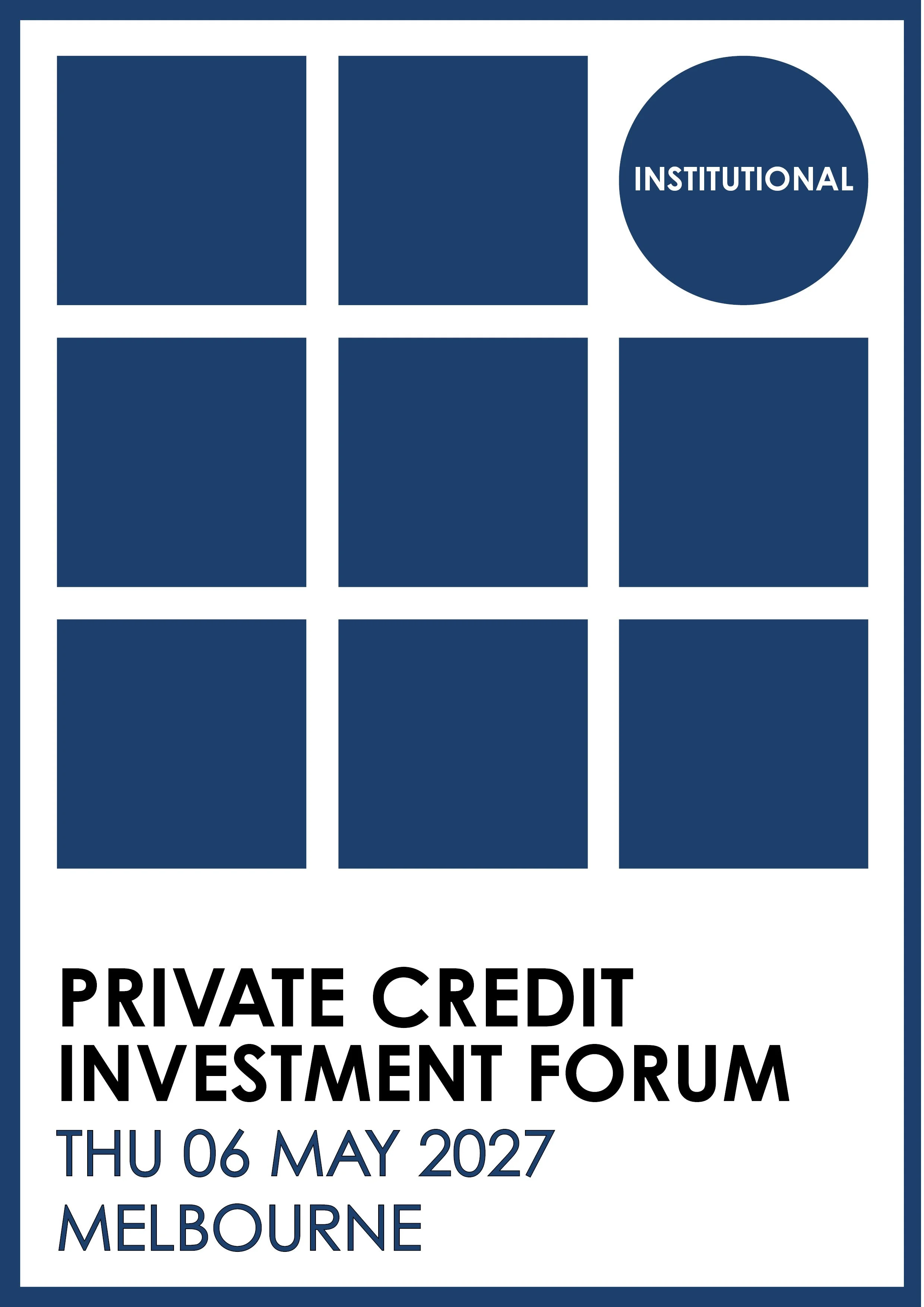
Dylan will be presenting at Global Investment Institute’s upcoming Private Credit Investment Forum, taking place on Thursday, 14 May 2026 in Melbourne CBD, Victoria. To register your interest in attending, click here or for more information email zlatan@globalii.com.au.

Dylan Ross, Managing Director, Portfolio Manager & Head of Asset-Backed Finance, TCW
Dylan is a Managing Director and Portfolio Manager and Group Head of TCW’s Asset-Backed Finance (“ABF”) investment team. He brings 20 years of experience in alternative credit investing with a primary focus on structured credit and asset-backed finance.
Prior to TCW, Dylan spent 16 years at Brigade Capital Management, LP where he helped launch the dedicated structured credit fund in 2014 and served as the Co-Head of the business. Additionally, Dylan was responsible for the structuring of the CLO issuance business and served on the firm Management Committee. During his time at Brigade, dedicated structured credit assets grew to approximately US$5 billion, while Brigade’s global CLO issuance platform exceeded US$10 billion in AUM. Prior to Brigade, Dylan was an Analyst in the Global Structured Product group at Banc of America Securities.
Dylan serves on the Leadership Council at Success Academy, a charter school network based in New York City. He received his BA in Mathematical Economics from Pomona College.

Global Investment Institute is Australia’s leading provider of conferences for capital allocators.
We connect institutional investors, family office and private wealth investment leaders with peers and global investment experts to share knowledge and thought leadership in a private, collegiate and discussion-focussed setting, conducted under Chatham House Rule.
Our upcoming events include:




If you have enjoyed reading this article, please subscribe to GII Insights, delivered monthly, direct to your inbox and it is FREE!
Disclaimer
The views and opinions expressed in this publication are those of the individual contributors and their respective organisations at the time of publishing. They do not necessarily reflect those of Global Investment Institute (GII). These views are not intended to be, and should not be construed as, investment advice or research. They are subject to change without notice, and no representation is made as to their ongoing accuracy or reliability. Forecasts, forward-looking statements, or opinions are inherently uncertain and based on assumptions, risks, and external factors which may change over time. The individuals interviewed have no obligation to update any statements made.
International investments carry additional risks, including potential loss of capital, currency fluctuations, differences in accounting standards, and economic or political instability.
All information contained in this publication is general in nature and does not take into account the financial objectives, situation, or needs of any individual or organisation. It should not be used as the sole basis for making investment decisions. GII strongly recommends seeking independent, fee-for-service financial advice before acting on any information contained herein.
Contributors, guest writers or interviewees may hold personal or professional financial interests in the investments discussed. The editorial team has assessed that these interests have not influenced the content of this publication.
All content featured in this publication is protected by copyright. No part may be reproduced, distributed, or transmitted in any form without prior written permission from the Global Investment Institute.