Spotlight on William Vettorato, Managing Director, Head of Evergreen Fund Strategy, EQT Group
Global Thought Leader Spotlight
William Vettorato, Managing Director, Head of Evergreen Fund Strategy, EQT Group

In my role as the Head of Fund Strategy for Evergreens at EQT, I am responsible for the management of our evergreen products. This includes structuring evergreen funds, allocation and deployment policy as well as liquidity management.
The role requires ensuring capital is deployed across the EQT platform in the most efficient manner to maximise investor outcomes.
We deploy investors’ funds across the EQT private capital platform into our closed-end funds and co-investments. These investments span the entire company life-cycle from ventures to mature buyouts. This requires a disciplined process of matching net applications with investment opportunities. In my role, I work closely with our global deal teams to understand EQT’s investment pipeline and activity.
I am also responsible for the external training and marketing of our evergreen products to the broader global wealth market. We currently distribute our evergreen funds globally across Europe, the Middle-East, North America and Asia Pacific.
Greater accessibility to global private equity
There is a common perception that private markets represent a single, high-volatility asset class that’s inherently riskier than public markets. Private markets are broad and diverse, ranging from infrastructure and real estate to venture capital and buyouts, each with different risk-return profiles. The growth of global evergreens is increasing access to these markets.
Many still believe that private markets are complex, completely illiquid, or simply out of reach for a lot of investors. This view is quickly becoming outdated due to the growth of evergreen structures and platforms designed specifically to meet the needs of individual investors, which are making private markets more accessible, more transparent, and more aligned with the needs of modern portfolio construction.
Increase regional allocations and global diversification
Investing in Europe and Asia is fundamentally different from investing in the US. Europe and Asia are a patchwork of nations with different cultures, languages, and regulatory systems.
That complexity makes it difficult to manage investments remotely, which is why EQT has prioritised having a local presence. To navigate these nuances effectively, EQT has built a network of offices in 25 countries across Europe and Asia.
Europe is entering what could be a renewed growth phase after years of underinvestment. The region currently draws around 60% less private capital than the US, with entry valuations roughly 1.5x lower. Combined with structural policy tailwinds and historic underinvestment, we believe this makes Europe particularly attractive.
Asia, meanwhile, represents around 60% of the world’s population and drives 60% of global GDP growth, yet it accounts for less than 10% of global buyout capital. This is a high-growth, underpenetrated opportunity set. Throughout just India, Japan and Australia & New Zealand, the combined buyout market is expected to grow by 2.5x from US$60bn to >US$150bn by 2030.
Implications for sophisticated investors
Continued growth of products: The implications for investors are that they will continue to have more choice in product within private markets. This can be a risk as there will be imitation funds and managers who will not get this right but there are also significant opportunities to invest directly within consistently high performing, top-quartile GPs globally.
Sophisticated investors can take a much more active approach to their asset allocation policy and select managers who will help them achieve their clients’ goals with tailored exposures to sectors and geographies with companies across the entire life-cycle, from venture to buyout.
Adopt a more global mindset: Australian investors should continue in step with their peers overseas. In Europe and Asia, private wealth investors inherently adopt a more global mindset when constructing their portfolios with investors accustomed to building globally diversified portfolios from day one.
In contrast, many Australian investors have historically focused on domestic and US markets for growth. This is increasingly changing as there is a growing recognition that future growth, innovation, and resilience will increasingly come from a more global set of markets.
William will be presenting at Global Investment Institute’s upcoming Private Wealth Investment Leaders Forum, taking place on Wednesday, 13 May 2026 in Melbourne CBD, Victoria. To register your interest in attending, click here or for more information email zlatan@globalii.com.au.
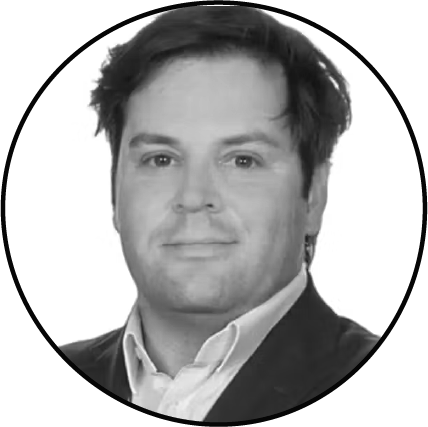
William Vettorato, Managing Director, Head of Evergreen Fund Strategy, EQT Group
William joined EQT in April 2023 as Head of Fund Strategy from Partners Group, where he had been the Senior Portfolio Manager of their Global Value SICAV fund in addition to being responsible of the portfolio management of key private wealth management offerings (ELTIFs, master-feeder structures, joint-initiatives). When he resigned from Partners Group (November 2022) he was managing private markets portfolios in excess of EUR 11bn NAV.
Prior to joining Partners Group, William worked at Morgan Stanley in London as a financial engineer and exotic option structurer.
William holds a master’s degree in Financial Econometrics from the University of Venice, Italy and a master’s degree in quantitative finance from the Swiss Federal Institute of Technology.

Global Investment Institute is Australia’s leading provider of conferences for capital allocators.
We connect institutional investors, family office and private wealth investment leaders with peers and global investment experts to share knowledge and thought leadership in a private, collegiate and discussion-focussed setting, conducted under Chatham House Rule.
Our upcoming events include:





If you have enjoyed reading this article, please subscribe to GII Insights, delivered monthly, direct to your inbox and it is FREE!
Disclaimer
The views and opinions expressed in this publication are those of the individual contributors and their respective organisations at the time of publishing. They do not necessarily reflect those of Global Investment Institute (GII). These views are not intended to be, and should not be construed as, investment advice or research. They are subject to change without notice, and no representation is made as to their ongoing accuracy or reliability. Forecasts, forward-looking statements, or opinions are inherently uncertain and based on assumptions, risks, and external factors which may change over time. The individuals interviewed have no obligation to update any statements made.
International investments carry additional risks, including potential loss of capital, currency fluctuations, differences in accounting standards, and economic or political instability.
All information contained in this publication is general in nature and does not take into account the financial objectives, situation, or needs of any individual or organisation. It should not be used as the sole basis for making investment decisions. GII strongly recommends seeking independent, fee-for-service financial advice before acting on any information contained herein.
Contributors, guest writers or interviewees may hold personal or professional financial interests in the investments discussed. The editorial team has assessed that these interests have not influenced the content of this publication.
All content featured in this publication is protected by copyright. No part may be reproduced, distributed, or transmitted in any form without prior written permission from the Global Investment Institute.